Leadership
Market Forces Demanded My Evolution from CEO to CIO/CTO/CSO
When market conditions force evolution, leaders have two choices: adapt or become irrelevant.
When market conditions force evolution, leaders have two choices: adapt or become irrelevant.
Introduction
In today’s digital age, technology leadership has become synonymous with business debut he is selling tradership. The traditional line between IT and the core business is rapidly disappearing. Corporate leaders such as CIOs, CTOs, and Chief Digital Officers are now expected to transform innovation into measurable business value rather than just manage back-end IT systems. As one recent insight put it, “as the line between technology and business disappears, enterprise tech leaders face a new mandate: turn innovation into measurable value.” (mckinsey.com) This means that tech leaders must think and act as business leaders, aligning technology initiatives directly with strategic goals and performance outcomes. The following sections explore how this convergence is playing out in practice — from driving sustainability in energy usage, to the evolving role of the CIO/CTO, to leveraging AI and data analytics — and how new digital KPIs are emerging to measure success.
Energy and Technology: Sustainability as a Value Driver
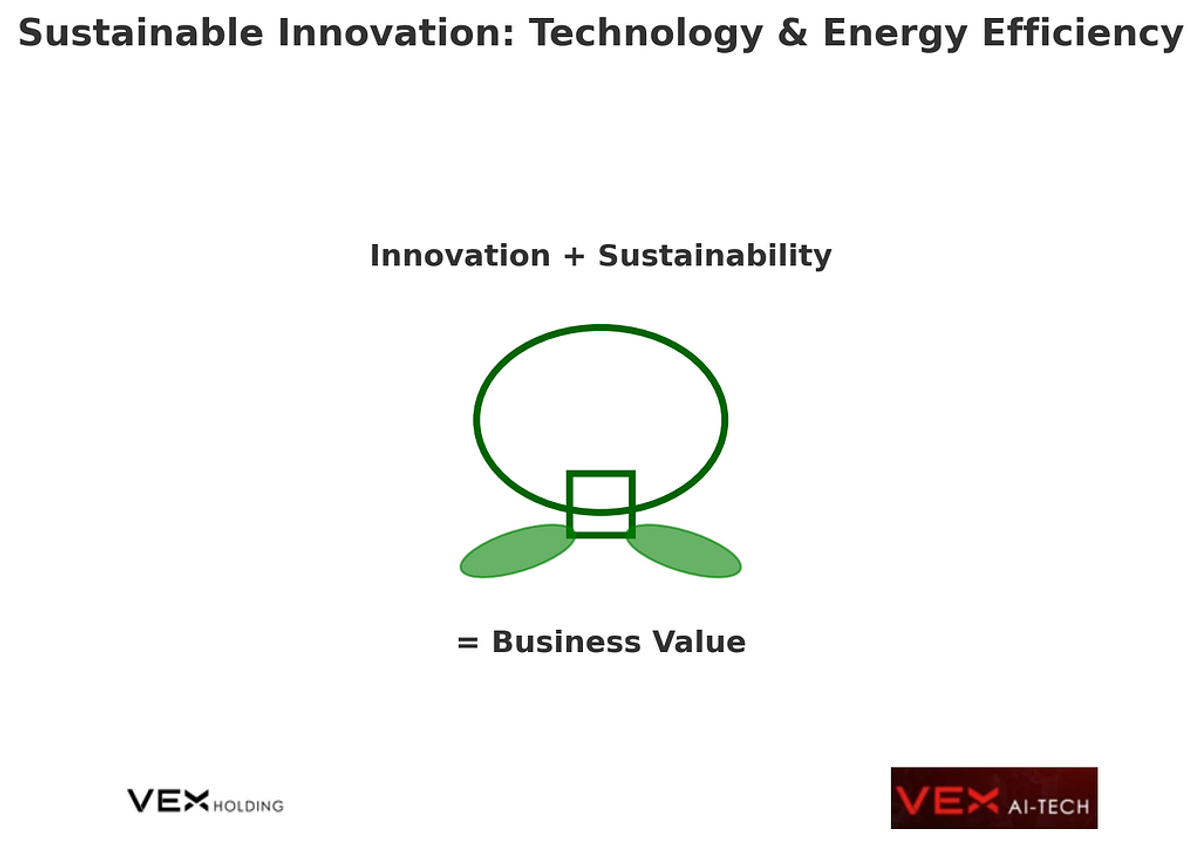
Modern executives recognize that technology strategy is intertwined with sustainability and energy efficiency goals. In fact, digital transformation is often seen as a key enabler of an organization’s environmental and energy objectives. In a 2023 global CIO survey, 92% of CIOs reported a clear link between ESG (environmental, social, governance) sustainability goals and enterprise value. Tech leaders are seizing this opportunity (and responsibility) to advance sustainability by improving energy efficiency and reducing carbon footprints through technology. Every company now has sustainability targets, and “digitalization goes hand in hand with sustainability” — meaning that digital tech is critical to delivering sustainable business value. For example, many CIOs are already factoring energy metrics into their decisions: nearly half of global CIOs “look at carbon output and energy efficiency when choosing new suppliers,” making greener IT a strategic priority. (Figure 1)
Figure 1: Illustration of sustainable innovation — technology growth (represented by seedlings and a lightbulb) aligned with energy efficiency. Tech leaders are increasingly expected to deliver innovation that also meets energy and environmental goals.
This focus on energy and technology is not limited to internal operations; it also transforms entire industries. In the energy sector itself (utilities, oil & gas, etc.), digital technology is enabling smarter grids, IoT-based efficiency improvements, and data-driven energy management. Yet, these initiatives must demonstrate clear value. A recent industry study found that nearly 30% of large energy companies see the inability to measure ROI as the top barrier to adopting new enterprise software and digital solutions. Stakeholders — from CEOs to regulators — demand proof that tech investments pay off in both financial and sustainability terms. It’s telling that 79% of energy organizations say it’s important for new enterprise software to have built-in capabilities to set and measure critical KPIs, such as resource utilization and asset performance. In other words, energy-focused tech innovation must come with metrics that quantify its impact on efficiency, cost savings, and carbon reduction.
Tech leaders are rising to this challenge by embedding sustainability into their digital transformation agendas. This can include initiatives like using AI to optimize data center cooling and cut energy usage, migrating to cloud or modern infrastructure for better power efficiency, and deploying analytics to track carbon emissions in real time. As a result, technology leadership now directly contributes to corporate sustainability commitments (e.g. net-zero pledges) — a clear example of tech strategy driving business value. By treating energy efficiency and green innovation as core metrics of success, CIOs and CTOs help ensure that “doing good” for the environment also means doing well for the business in terms of reputation, compliance, and long-term cost savings. New digital KPIs are beginning to reflect this dual mandate, as discussed later.
The Evolving Role of the CIO/CTO: From IT Manager to Business Strategist
The role of the Chief Information Officer (CIO) and Chief Technology Officer (CTO) has expanded far beyond managing IT operations — it now encompasses co-driving business strategy and growth. Simply put, modern technology officers are expected to be business leaders. Research by McKinsey underscores that tech executives must shift “from supporting business leaders to shaping how their companies generate value,” even taking on real P&L accountability for business outcomes (mckinsey.com). This represents a dramatic evolution from the days when IT’s job was merely keeping the systems running. Today, a CIO is often a key strategist at the executive table, helping steer the company’s direction through technology innovation.
Several trends illustrate this new reality. Many organizations have broadened the CIO role into titles like Chief Digital and Information Officer (CDIO) or Chief Digital Transformation Officer, reflecting the blending of technology with core business transformation. Technology leaders now often orchestrate cross-functional initiatives that directly drive revenue, customer experience, and product innovation. McKinsey analysts describe modern tech chiefs as wearing multiple hats — “orchestrator, builder, protector, and operator” — to meet business needs. In the orchestrator role, the tech leader partners with the CEO and business unit heads to integrate tech into every facet of strategy, breaking down silos and ensuring that digital initiatives actually translate to enterprise-wide value. As a builder, the CIO/CTO might incubate new digital products and services that become revenue-generating lines of business (for example, launching a data analytics product for customers, or monetizing a platform the company developed). (mckinsey.com) In the protector role, they safeguard the company’s revenue and reputation through cybersecurity and resilient systems — a business-critical risk management function in the digital era. And as an operator, the tech leader drives efficiency by infusing automation and technology into core operations, from supply chain to customer service, often extending their influence into traditionally non-IT domains.
This expanded mandate requires new leadership approaches. Harvard University CIO Klara Jelinkova characterizes the job as relying on “soft power” to influence and collaborate across the organization, rather than just issuing directives from an IT silo. She notes that IT used to be about service management — keeping the lights on — “and is now more about strategic co-leadership with business partners,” where success is measured by how technology investments directly support the institution’s mission and outcomes. (mckinsey.com) In practice, this means CIOs spend much of their time working with other executives on joint initiatives, communicating in business terms, and even leading teams that include both IT and business staff. Indeed, in some companies tech leaders are managing revenue-generating business units and product teams in addition to IT teams, reflecting the convergence of tech and business functions. (mckinsey.com) They are also increasingly evaluated on business KPIs. For instance, instead of solely tracking uptime or IT budget variance, a CIO might have performance goals around digital product revenue, customer satisfaction improvements, or percent of business coming from e-commerce channels. Their incentives and bonuses may be tied to these business metrics, aligning technology leadership with enterprise financial success.
Crucially, top tech leaders foster a culture where technology and business strategy are indistinguishable. They champion an “IT value story” that the whole C-suite can understand, effectively translating tech capabilities into business opportunities. By doing so, they avoid the dreaded “death by a thousand pilots” — the scenario where a company runs many flashy technology experiments that never scale or add up to real results. Instead, effective CIOs drive focused change at scale: they ensure, for example, that an AI pilot in one department is integrated into an enterprise-wide process improvement, or that a new digital platform is backed by an operating model change and staff training, so it delivers intended value. In summary, the CIO/CTO is now a change leader and value architect. Technology initiatives are no longer side projects or support functions — they are core to the business, and the tech leader is co-responsible for business outcomes. This evolution in role is setting the stage for how organizations leverage emerging technologies like AI and data analytics for competitive advantage.
AI and Data Analytics: Turning Hype into Measurable Value
Perhaps the biggest test of the “tech as business” mindset is the current wave of Artificial Intelligence (AI) and advanced analytics. AI and data-driven technologies promise transformative business value — from automating processes and uncovering insights to creating personalized customer experiences and new AI-powered products. Corporate leaders are investing aggressively in these areas, often out of fear of missing out. However, the onus is on tech leadership to ensure these investments translate into tangible results and not just hype. The stakes are high: after the explosive emergence of generative AI, surveys indicate that consistent ROI from AI initiatives remains elusive. According to an IBM Institute for Business Value study, only about 25% of AI projects in recent years have met their ROI expectations. (cio.com) This sobering statistic suggests that despite AI’s immense potential, many organizations are struggling to realize business value from their AI experiments. Common pitfalls include rushing into trendy technologies without a clear use case or deploying AI solutions that never make it past pilot stage into full production.
Tech leaders must prevent these missteps by tightly aligning AI and analytics projects with business strategy and by setting realistic goals. Rather than doing AI for AI’s sake, the focus should be on solving concrete business problems — for example, using machine learning to reduce supply chain costs by forecasting demand more accurately, or applying AI assistants to improve customer service response times and thus boost customer retention. Data analytics likewise should be driven by strategic questions (e.g. which customer segment should we target?) and integrated into decision-making processes company-wide. Leading CIOs approach AI as one component of a larger transformation, ensuring supporting elements are in place: high-quality data, employee training, updated processes, and governance to manage risks. They recognize that achieving ROI from AI may require new operating models and a willingness to scale successful pilots.
Figure 2: Technology teams collaborating in a modern data center environment. Enterprise tech leaders are investing in AI and data infrastructure (cloud, storage, networks) to power advanced analytics and machine learning — but success requires aligning these investments with business strategy and ensuring adoption across the organization.
Additionally, the rise of AI is creating new demands on IT infrastructure and energy resources, reinforcing why CIOs must balance innovation with efficiency (tying back to the sustainability discussion). For instance, AI and machine learning workloads are now a leading driver of IT resource growth — a recent study found they already consume about 24% of enterprise data center storage capacity on average. Supporting AI at scale means handling massive data and computation, which in turn elevates importance of cloud strategies, data management, and energy-efficient computing. Tech leaders are addressing this by adopting scalable cloud platforms, specialized AI chips, and optimization techniques to manage costs and power usage. Notably, energy efficiency has become a key criterion in evaluating AI and data infrastructure: in one survey, over 80% of IT decision-makers rated power and cooling efficiency as extremely important when expanding storage for AI, and nearly three-quarters said compliance with sustainability goals factors into their infrastructure choices. (cio.com) In short, the push to harness AI’s power is inseparable from the need to do so in a responsible, cost-effective way — a balance that tech executives must navigate.
Ultimately, AI and analytics can fulfill their promise only under strong tech-business leadership. When CIOs steer AI initiatives with clear business objectives and cross-functional buy-in, they can deliver impressive outcomes — whether it’s a surge in productivity, a new revenue stream, or a differentiated customer experience. Moreover, by measuring and communicating those outcomes (for example, reporting that an AI-driven process automation saved the company $X million in operating costs or that data analytics improved marketing conversion by Y%), technology leaders reinforce the business value of AI. This cultivates a virtuous cycle: success stories build trust in further tech investments. In contrast, when AI projects are pursued in isolation or without metrics, they risk becoming expensive science experiments. As the AI era matures, the most successful enterprises will be those whose tech leaders have converted AI from a buzzword into a practical tool for business impact — turning hype into measurable results. The key to doing so often lies in how we define and track “success” for digital initiatives, which brings us to the importance of new digital KPIs.
New Digital KPIs: Measuring What Matters in Digital Transformation
Given the expanded responsibilities of tech leadership and the high expectations on digital initiatives, traditional IT metrics (like system uptime or ticket response times) are no longer sufficient to gauge success. Organizations are developing new Key Performance Indicators (KPIs) to quantify the business impact of technology and innovation. These “digital KPIs” bridge the language of IT with the language of business value (Figure 3). For example, McKinsey suggests that digital-era executives track metrics such as the financial return on digital investments, the percentage of leadership incentives linked to digital success, and the share of the annual technology budget devoted to bold, innovative projects. (cio.com) Each of these metrics ties technology efforts directly to strategic outcomes: ROI on digital spend shows whether innovation is profitable, linking leadership bonuses to digital results ensures accountability at the top, and budgeting for bold initiatives signals commitment to transformative (not just incremental) change.
Figure 3: Business executives reviewing dashboards and reports with key digital performance metrics. Defining the right KPIs — from digital revenue growth to customer experience improvements — is critical for steering digital transformation and ensuring technology initiatives deliver measurable business outcomes.
The process of choosing the right digital KPIs is itself a strategic exercise. Consultants warn that measuring too many things or the wrong things can doom a transformation. If a company fixates on vanity metrics (like number of new apps launched) rather than outcome metrics (like user adoption or revenue from those apps), it may get a false sense of progress. A best practice is to maintain a focused portfolio of KPIs that reflect value creation. As one CIO advisor put it, “What gets measured gets managed… Choose what you measure carefully to achieve the desired results. Keep the number of metrics small and manageable — ideally three or four key ones — because people cannot focus on multiple pages of data.” (cio.com) This advice highlights the need to distill the complex scope of digital transformation into a handful of meaningful indicators that everyone from the boardroom to project teams can rally around.
Common categories for digital KPIs include: Growth (e.g. percentage of revenue from digital products or channels, customer acquisition via digital channels), Efficiency (e.g. cost savings from automation, productivity gain per employee from new tools), Customer Experience (e.g. NPS or satisfaction scores for digital services, online customer retention rates), and Innovation (e.g. number of new services launched, speed of new feature delivery, adoption rate of new technology internally). In the context of sustainability, we also see KPIs like carbon reduction per unit of IT output or energy savings from IT improvements, as noted earlier. The exact metrics will differ by industry and company strategy, but the unifying theme is that they translate tech initiatives into business outcomes. For instance, a bank undergoing digital transformation might track the increase in active mobile banking users (a proxy for customer digital adoption and engagement) alongside traditional financial metrics. An energy company investing in smart grids might measure reduction in downtime or improvement in energy distribution efficiency due to digital systems. These metrics provide evidence of progress and help justify continued investment.
An important trend is embedding these KPIs directly into governance and decision-making. Leading companies now include digital KPIs in management scorecards and even in executives’ performance evaluations (not just the CIO’s, but also business unit leaders, to reinforce shared accountability). Some organizations have created real-time KPI dashboards to monitor transformation progress, allowing leadership to spot issues early — for example, if user adoption of a new platform is lagging or if a project’s realized benefits are below target, interventions can be made promptly. Benchmarking is also useful: comparing KPI values against industry peers or best-in-class digital leaders can set aspirational targets. Gartner’s research, for example, provides benchmark data on what top-performing digital organizations achieve on certain metrics, guiding others on where they need to improve. (gartner.com)
In summary, defining and tracking the right digital KPIs is now a fundamental part of tech leadership. It closes the loop between initiative and outcome, enabling a narrative that “this AI implementation improved our gross margin by X points” or “our digital channels now drive Y% of total sales, up from Z% last year.” Such narratives make the business value of technology tangible. They also create clarity and focus: when everyone knows the key goals (be it customer digital engagement, speed to market, or operational cost index), teams can align their efforts accordingly. For executives, these metrics are invaluable for steering the enterprise through transformation — much like a compass pointing toward true north. And for CIOs and CTOs, who are now firmly in the business-value driver’s seat, digital KPIs serve as both scorecard and guidepost: they demonstrate success to stakeholders and help identify where to double down or pivot in the ongoing journey of digital and technological evolution.
Conclusion
Tech leadership is business leadership — this is no longer just a catchy phrase but an everyday reality in modern enterprises. The examples above illustrate that corporate technology leaders are deeply involved in steering strategy: whether it’s deploying tech to meet sustainability targets, reinventing their own role to co-own business outcomes, or leading the charge on AI and analytics with a clear eye on ROI. The mandate to “transform innovation into measurable value” is redefining what it means to be a CIO/CTO. (mckinsey.com) It’s a challenging mandate, to be sure, requiring new skills, closer cross-functional collaboration, and often a change in mindset across the organization. Yet, it is also a tremendous opportunity. Technology, after all, is one of the biggest levers for business growth and competitive advantage today. Executives who can harness that lever — and clearly demonstrate its impact through the right metrics — effectively become the architects of their companies’ future. In doing so, they erase any remaining divide between “business strategy” and “technology strategy” and simply create one unified strategy for success in a digital world.
About the Author
Alan Mössinger is a global CEO who embodies the evolution from traditional industry leadership to AI-driven business transformation. As CEO & Founder of VEX Holding, he built a multinational AI, consultant and healthcare portfolio from concept to $1M ARR across four countries witin 24 months, demonstrating the entrepreneurial agility that modern markets demand.
His transformation journey began during two decades at Petrobras, where he progressed from technical advisor to coordinator of a multi-billion-dolar offshore exploration portfolio. His data-driven approach contributed to discoveries exceeding 100 billion barrels in place while delivering AI implementation in E&P workflow.
Currently pursuing executive education at MIT Sloan’s General Management Program, Alan has established himself as a trusted advisor to C-level executives navigating the convergence of energy transition, AI implementation, and digital transformation. His 40+ published strategic articles reach thousands of readers per piece, focusing on translating complex technological concepts into actionable business strategies.
With his tri-cultural background spanning German precision, American innovation, and Brazilian warmth, Alan brings a unique perspective to the intersection of traditional energy operations and cutting-edge AI technologies. His work spans three continents and exemplifies how modern leaders must master the convergence of CEO vision, CTO implementation, CIO integration, and CSO sustainability mandates to remain competitive in today’s rapidly evolving business landscape.
References:
[1] McKinsey & Company — “Tech leadership is business leadership.” (September 7, 2025) mckinsey.com
[2] Logicalis, Global CIO Report 2023 — N. Pedras interview: “Digitalisation goes hand in hand with sustainability… Every company now has sustainability goals and digitalisation is the key to delivering sustainable business value.” (Apr 2023) logicalis.comlogicalis.com
[3] Logicalis — Global CIO Report 2023 Findings. 92% of CIOs see link between sustainability (ESG) and enterprise value; 49% of CIOs consider carbon output and energy efficiency in selecting suppliers logicalis.comlogicalis.com.
[4] Intelligent CIO (Europe) — “Energy companies’ Digital Transformation efforts driven by need for tighter integration and collaboration.” (Nov 8, 2022). Finding that inability to measure ROI is a top barrier (nearly 30% of firms), and 79% insist on embedded KPI measurement in enterprise software intelligentcio.com.
[5] McKinsey Quarterly — Baig et al., “A new dawn for the technology officer.” (Sept 11, 2024). Describes the evolving CIO mandate: tech leaders must move from supporting to shaping strategy, taking on P&L accountability mckinsey.com; outlines new roles (Orchestrator, Builder, Protector, Operator) for tech officers driving business value mckinsey.commckinsey.com.
[6] McKinsey Interview — G. Shenai with K. Jelinkova, “The ‘octopus CIO’: Strategic technology leadership at Harvard.” (Aug 19, 2025). Emphasizes soft power and co-leadership: “IT…is now more about strategic co-leadership with business partners,” and shifting from tech delivery to connecting IT investments to outcomes mckinsey.com.
[7] CIO.com — Grant Gross, “What ROI? AI misfires spur CEOs to rethink adoption.” (May 29, 2025). Reports that only ~25% of AI initiatives have met ROI expectations according to CEOs (IBM survey), underscoring the value gap in many AI projects cio.com.
[8] McKinsey Digital — “A new dawn for the technology officer.” (2024). Note on integration: warns against scattered tech experiments “that don’t add value (‘death by a thousand pilots’)” and advocates an orchestrator approach to achieve impact at scale mckinsey.com.
[9] CIO.com — Isaac Sacolick, “Digital KPIs: The secret to measuring transformational success.” (Jan 23, 2024). Recommends focusing on outcome-based digital KPIs; e.g. McKinsey’s five metrics for digital leaders (ROI on digital investments, % of leader incentives tied to digital, % of tech budget on bold initiatives, etc.)cio.com. Also notes Deloitte and MIT findings on digital metrics cio.com.
[10] CIO.com — I. Sacolick, “Digital KPIs: The secret to measuring transformational success.” Advice from experts: choose a small set of key metrics (3–7 at most) aligned to desired outcomes, because “people cannot focus on multiple pages of data.” cio.com
[11] Foundry (CIO.com) Survey — “Data centers for AI and sustainability” (Feb 2025). Indicates AI/ML workloads driving 24% of storage usage cio.com and highlights importance of energy efficiency (82% of orgs) and sustainability compliance (72%) in IT infrastructure decisions cio.com, reflecting how tech leaders balance innovation with power/cost considerations.