AI Strategy
CEO AI Blueprint 2024
2024 is a turning point as CEOs enter a “Management AI Thunderstorm” driven by rapid advances in generative AI. This executive guide outlines where AI creates value today, how to build an AI blueprint, and what governance and workforce readiness are required to scale responsibly.

AI Landscape and a Forward-Looking Guide for CEOs in 2024
Management AI Thunderstorm — Planning and Predictions
Introduction
2024, the breaking point to embark on the new era. CEOs are sailing into the ‘Management AI Thunderstorm’, a period characterized by rapid and transformative advancements in Artificial Intelligence (AI), particularly in the realm of generative AI. This guide probe the current AI landscape, offering strategic insights for leveraging AI to drive business innovation and growth.
Current Business and AI Role
AI’s Transformative Role in Business is revolutionizing key areas, from decision-making to customer engagement, fundamentally altering how businesses operate and compete.
AI’s advanced analytics capabilities provide CEOs with deeper insights for strategic decisions and it could drive decision-making process. Leveraging AI for predictive analytics enables businesses to anticipate market trends and customer needs more accurately.
Operational efficiency through AI enhances automating and optimizing processes. This leads to cost savings and improved productivity, allowing companies to focus on innovation and growth.
AI is transforming customer engagement by enabling personalized experiences at scale. This fosters stronger customer relationships and loyalty.
Generative AI
Generative AI is a new frontier and a game-changer in terms of creativity and innovation. It can generate novel ideas, design products, and create content, pushing the boundaries of what’s possible in product development, marketing, and beyond.
It takes customization to new heights, allowing businesses to create highly personalized products and services. This can lead to significant competitive advantages in terms of customer satisfaction and loyalty.
Solving complex business challenges applying Generative AI’s ability is paramount and synthesize vast amounts of data makes it an invaluable tool for solving compound challenges. It can identify patterns and propose solutions that might not be apparent to human analysts.
Ethical and responsibility need to be prioritized due to Generative AI powerful technology. CEOs must ensure its liable use, particularly regarding data privacy, bias mitigation, and transparency.
Strategic AI Blueprint for 2024
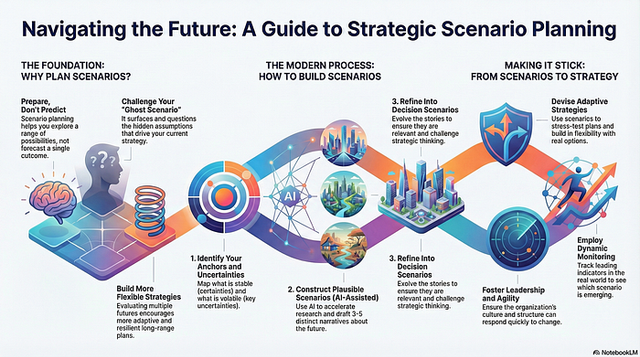
The first step in crafting an AI blueprint is understanding your business needs. Identify the areas where AI can add value. This could be anything from improving customer service with AI chatbots to optimizing supply chain management with predictive analytics. Once you’ve identified your business needs, set clear and measurable goals. What do you hope to achieve with AI? This could be reducing operational costs, improving customer satisfaction, or driving innovation.
There are various AI technologies available, from machine learning to natural language processing. Choose the technologies that best align with your business needs and goals. AI algorithms rely on data. Assess your current data infrastructure. Do you have the necessary data to support your AI initiatives? If not, consider ways to collect and manage the data you need.
Get Alan Mössinger’s stories in your inbox
Join Medium for free to get updates from this writer.
Subscribe
Decide whether to build your own AI solutions or buy from vendors. Building your own solutions gives you more control but requires significant resources. Buying from vendors can be more cost-effective and allows you to leverage their expertise.
Planning AI governance involves setting policies and procedures for AI use. This includes data management, model validation, and ongoing performance monitoring.
Building an AI-savvy and fluent workforce is key to maximizing AI benefits. Training and upskilling employees in AI literacy is critical for effective AI integration. You’ll need a team with the right skills. This might involve hiring new talent, upskilling current employees, or partnering with external experts.
Before fully implementing AI, conduct pilot projects to test the effectiveness of your solutions. Once you’ve refined your approach, you can scale up your AI initiatives.
AI is not a one-time project but a continuous process. Regularly review your AI strategy and make necessary adjustments. This will ensure your AI initiatives stay aligned with your business needs and goals. By following these steps, businesses can harness the power of AI to drive growth and innovation in 2024 and beyond.
AI’s Short and Long-Term Business Implications
In the short term, AI offers benefits in efficiency, cost reduction, and enhanced customer engagement. AI can automate repetitive tasks, freeing up employees’ time for more complex and creative tasks. This leads to increased productivity and efficiency. For example, AI chatbots can handle customer inquiries, allowing customer service representatives to focus on more complex issues.
By automating tasks and improving efficiency, AI can lead to significant cost savings. Businesses can reduce their operational costs and reallocate resources to areas that can drive growth.
AI algorithms can analyze large volumes of data to extract meaningful insights. These insights can inform decision-making, helping businesses to better understand their customers, optimize their operations, and identify new opportunities.
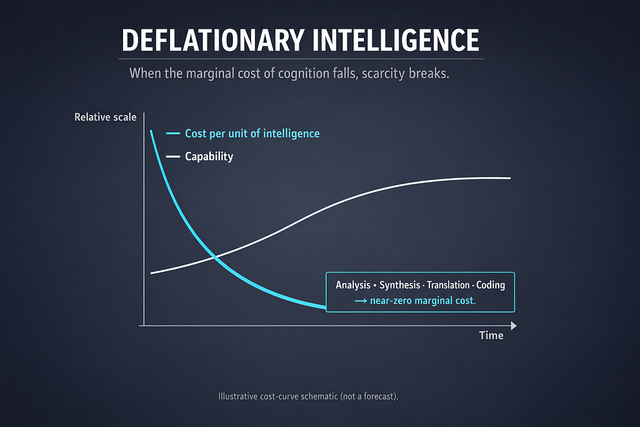
In the long run, AI, especially generative AI, will redefine business models and the competitive scenery. AI has the potential to fundamentally transform and leverage current conditions and offer personalized products and services, creating new revenue streams in order to redefine their value proposition.
Businesses that effectively leverage AI can gain a significant competitive advantage. They can use Generative AI to reliably predict market trends, optimize their supply chain, and deliver superior customer experiences.
Conclusion
The ‘Management AI Thunderstorm’ presents unique challenges and opportunities for CEOs in 2024. Successfully maneuver this landscape requires a deep understanding of AI, particularly generative AI, strategic integration, and a commitment to ethical practices. By embracing these technologies, CEOs can position their organizations for sustained growth, innovation, and competitive advantage in a rapidly evolving business world. Furthermore, actions must start now, or take the risk to stay behind otherwise.
I am happy to receive any feedback about this article;
Please feel free to connect on linkedin;
Please feel free to explore my portfolio on Github;
In case you want to read more about my articles on medium, I would be very glad to meet with you as a follower;
I write about #Machine Learning, #Data Science, #Energy, #Renewable Energy, #Artificial Intelligence, #Project Management, #Strategy, #Business Analytics, #Statistics and Probability